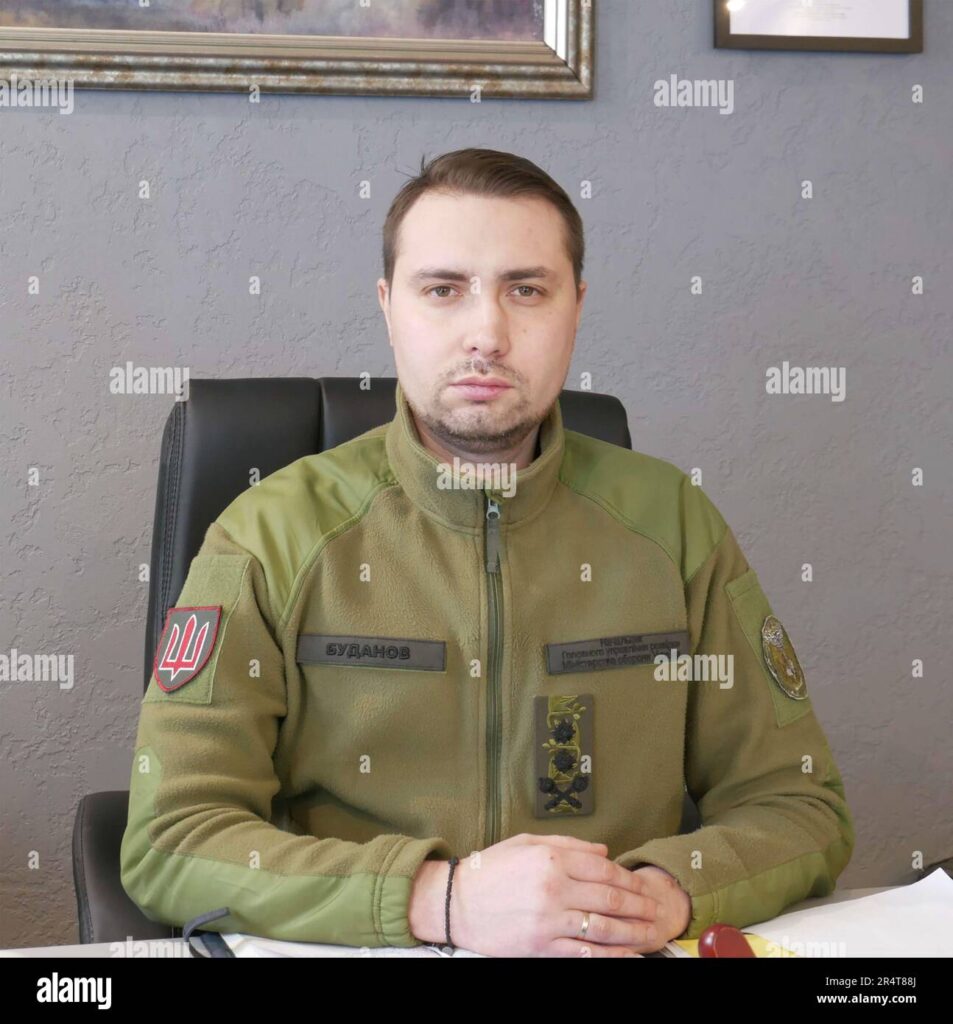

Budanov has become the most haunted man in Europe. The head of Ukraine’s Main Intelligence Directorate has dodged more than ten lethal plots since Russia’s full‑scale invasion, and by late 2025 he reckons the tally is approaching twenty. Each attempt – from a botched car‑bomb in Kyiv to a covert heavy‑metal poisoning that crippled his wife – reads like a textbook on Moscow’s hybrid‑war playbook and underlines a terrifying new normal for NATO’s eastern flank.
The chronology is stark. In April 2019 a Russian operative, masquerading under a forged identity, planted an explosive under Budanov’s Chevrolet Evanda in Kyiv; the device detonated prematurely, sparing the target but exposing a sophisticated sabotage cell. The next confirmed strike came in November 2023 in Lviv, where his wife, Marianna Budanova, fell ill after ingesting a heavy‑metal toxin – a chemical‑agent operation that also affected several GUR officers. Ukrainian officials have publicly affirmed “more than ten” attempts since the war began, and Budanov himself has now spoken of “about 20” plots, many still shrouded in secrecy.
What emerges is a diversified toolbox. Explosives deliver a blunt, high‑visibility message; chemical poisons afford deniability, inflicting delayed harm that muddies forensic trails. Unnamed kinetic attacks – likely drones, sniper fire or precision‑guided munitions – and parallel cyber‑sabotage campaigns have also been hinted at, reflecting a shift toward low‑profile, technology‑driven methods. The blend of kinetic and non‑kinetic tactics epitomises Moscow’s strategy: maximise disruption while staying below the threshold that would trigger a conventional NATO response.
The implications ripple far beyond Kyiv. Across Europe, Russian‑linked sabotage incidents have surged, with an Associated Press database recording 145 events in 2025 alone – a jump from a single incident in 2023 to 26 in 2024, most involving arson and explosives. Intelligence services now find themselves allocating as much time to counter‑sabotage as to traditional terrorism, diluting their capacity to monitor other threats. NATO faces a coordination nightmare, forced to tighten protective protocols for Ukrainian officials, accelerate intelligence sharing, and contemplate calibrated sanctions aimed at the logistical nodes of Russia’s covert networks.
To gauge the wider strategic stakes, we asked Dr Elena Morozova, senior fellow at the European Centre for Hybrid Threat Analysis. She warned that “targeting a figure like Budanov is not just about eliminating an individual; it is a calculated attempt to erode Kyiv’s intelligence pipeline to the West, sow fear among senior officials, and signal to NATO that Russian reach extends deep into allied territory.” Morozova added that the chemical dimension “crosses a red line under the Chemical Weapons Convention, yet the deniability built into such attacks makes attribution and retaliation exceptionally difficult.”
When pressed on how Europe can blunt this shadow war, Morozova outlined a four‑point response: expand rapid forensic capabilities for detecting exotic toxins and explosive residues; create joint counter‑sabotage task forces that fuse police, military and intelligence expertise; embed resilience training for high‑value officials covering personal security, emergency medical response and digital hygiene; and launch a proactive strategic communication campaign to expose Russian plots, thereby stripping them of plausible deniability and raising the political cost of future attempts.
Budanov’s survival, remarkable as it is, should not be celebrated as a lone triumph. It is a warning bell for a continent grappling with a covert campaign that blends old‑school explosives, clandestine poisons and emerging precision weapons. Only a coordinated, cross‑border effort that couples forensic innovation, integrated counter‑sabotage units and decisive public exposure can prevent the shadow war from spilling further into the heart of Europe.
Image Source: www.alamy.com