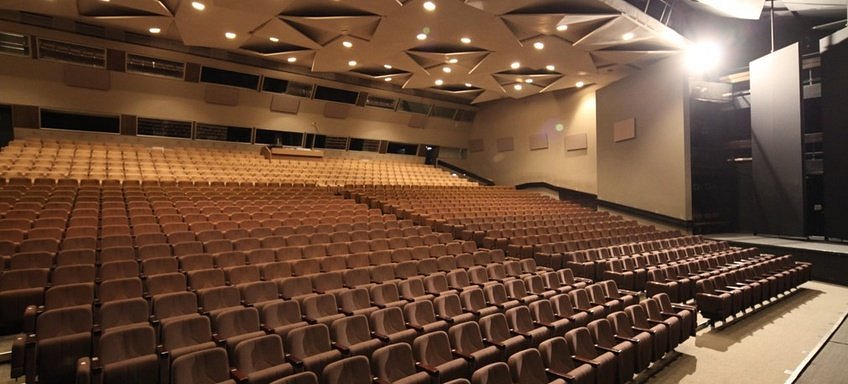

The Ministry of Culture’s €276,205 slash to Dailes Theatre’s state grant has ignited a firestorm that now roars through Latvia’s most storied stage. Within weeks the theatre announced the termination of seven permanent actor contracts, a €200,000 production‑budget cut and a pivot toward “quick‑return” projects – all without consulting the artists who bring the house to life. The result? A coalition of veteran performers and a leading light‑artist have taken to the public square demanding a formal apology for what they describe as a “toxic communication culture”.
The cuts were presented as a market‑driven survival strategy, yet the manner of their delivery betrayed a deeper malaise. Emails from senior managers were terse, offering little justification and ignoring follow‑up queries, while no grievance procedure existed for staff to contest the decisions. Actors Mirdza Martinson, 74, and Olga Dreģe, 86, together with the light‑artist, issued a joint statement in early 2026 condemning the unilateral approach and warning that the loss of seven permanent positions – each worth roughly €37,000 a year – threatens the theatre’s artistic integrity as much as its finances.
The dispute is not merely about numbers; it shines a light on governance practices that diverge sharply from the Baltic norm. The Latvian National Opera (LNO), for example, operates as a state‑owned limited‑liability company overseen by a governing board chaired by Sandis Voldiņš. Its statutes, approved by the Cabinet of Ministers, demand board approval for strategic plans, budgets and senior appointments, ensuring a transparent, multi‑tiered decision‑making process. By contrast, Dailes Theatre’s top‑down announcements occurred without any documented board review or artists’ council, leaving the creative core excluded from the very decisions that reshape their work.
International theatre‑governance guidelines stress six pillars of good practice: a clear mission, an engaged board, effective management, robust financial oversight, open communication and a culture of accountability. Dailes falls short on at least three. Its communication policy is absent, grievance mechanisms are non‑existent, and financial decisions – driven by the Ministry’s funding cut – were allocated internally without external audit or board scrutiny. The result is a perception of opacity that fuels mistrust and, ultimately, public protest.
What could mend the breach? While the actors have not outlined a detailed reform plan, the gaps they expose map neatly onto recognised solutions. Establishing an artists’ advisory board would give performers a seat at the strategic table, while a written communication handbook could curb dismissive correspondence. An independent mediation channel would provide a neutral venue for disputes, and a transparent budget disclosure would rebuild confidence that financial pressures are being managed responsibly. Such reforms would align Dailes with the governance standards demonstrated by the LNO and the broader best‑practice framework.
Sidebar – Baltic Theatre Funding Models
Latvia: The LNO’s state‑limited‑liability structure ties funding to statutory oversight, with the Ministry of Culture as sole shareholder and a board that must approve all major financial moves.
Estonia: Detailed governance arrangements for the Vanemuine Theatre remain opaque, with limited public documentation on board composition or oversight mechanisms.
Lithuania: Similarly, the National Drama Theatre’s internal decision‑making processes are not publicly disclosed, suggesting a possible reliance on informal hierarchies rather than codified governance.
Implication: Dailes Theatre’s current model, characterised by unilateral management decisions, appears more isolated than its regional peers, underscoring the urgency of adopting a clearer, participatory framework.
The Dailes episode is a cautionary tale for post‑communist arts institutions navigating fiscal austerity and the demand for transparency. By confronting its governance shortcomings and embracing reforms that embed artists in decision‑making, the theatre can turn a crisis into a catalyst for sustainable, collaborative renewal – and, perhaps, finally earn the apology it has been asked to give.
Image Source: www.tripadvisor.fr