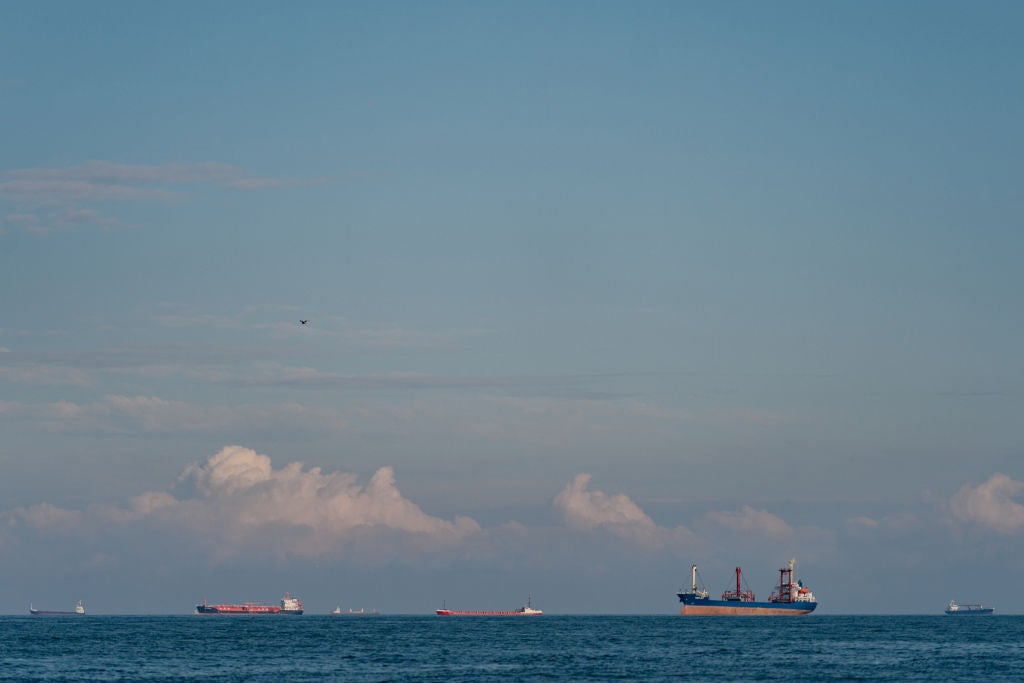

Russian attack drones slammed into Odesa’s harbour on the night of 26 December, shattering the hull of the Slovak‑flagged bulk carrier Majestic and denting the port’s infrastructure. The strike left the vessel further crippled but, miraculously, caused no injuries – a stark reminder that neutral ships can become collateral in a war fought far from their flag.
Majestic had been moored, unmanned and manned solely by a Ukrainian crew, awaiting repairs after earlier Russian air raids rendered it “not seaworthy”. The drone barrage, launched under cover of darkness, hit the ship’s superstructure and hull while it sat idle in Odesa’s territorial waters, a non‑belligerent port under Ukrainian jurisdiction. Adjacent foreign‑flagged vessels – a Palau‑flagged and a Liberian‑flagged ship – suffered similar damage, and the same raid knocked out power, grain elevators and warehouses across the Odesa‑Izmail district.
The weapons used were loitering‑munition‑type unmanned aerial systems, the same “attack drones” Russia has fielded in recent months to strike ports and industrial sites. Operating at night, the drones flew a broad‑area pattern that struck both critical infrastructure and civilian vessels, suggesting an indiscriminate approach rather than a precision strike on a military target. Their payloads were sufficient to breach hulls and damage superstructures but did not generate the lethal force that would have caused crew casualties.
Under the United Nations Convention on the Law of the Sea, neutral merchant ships enjoy freedom of navigation and protection from hostile acts while in the territorial waters of a non‑belligerent state. The 1907 Hague Convention XIII further obliges belligerents to refrain from attacking neutral vessels docked in neutral ports unless they are carrying contraband or used for military purposes. By targeting Majestic – a civilian cargo ship with no Slovak nationals aboard and no evidence of military use – Russia violated the principle of distinction enshrined in the law of armed conflict, potentially incurring state responsibility and reparations liability under customary international law.
The EU is poised to respond on several fronts. Brussels is expected to issue an immediate condemnation, invoking UNCLOS and the Hague conventions to demand accountability. Diplomatic pressure will likely be coupled with targeted sanctions against the Russian units or command structures that operated the drones, building on the Union’s existing restrictive‑measure regime against entities facilitating attacks on civilian infrastructure. Slovakia, as flag‑state, may lodge a state‑to‑state claim for damages through UNCLOS dispute‑resolution mechanisms, with EU backing.
Beyond the legal fallout, the incident reshapes the risk calculus for EU‑registered tonnage in the Black Sea. Insurers are already flagging higher premiums for voyages that call at Odesa or nearby ports, reflecting the newfound vulnerability of neutral ships to loitering‑munition strikes. Any prolonged disruption to Odesa’s grain‑export capacity threatens to tighten food supplies and lift prices across Europe, while rerouting cargoes will increase transit times and logistical costs for a range of industries. In response, the EU is likely to augment naval patrols and escort services under the EU‑Navfor framework, and to issue updated routing advisories that steer EU vessels away from high‑risk zones until security guarantees improve.
In sum, the drone strike on Majestic is a clear breach of the protections afforded to neutral merchant vessels under international law and a strategic alarm for the EU. It forces a multi‑layered reaction: diplomatic denunciation, legal recourse, sanctions, and tangible maritime‑security measures. Only a decisive, coordinated Union response can safeguard the commercial lifelines that bind Europe to the Black Sea and reaffirm the rule‑based order that underpins global trade.
Image Source: www.ship-technology.com