

Serbia has been hit with a €750 million financial blow that opposition parties have christened the “hajka” scandal – a phrase that now epitomises a web of opaque deals, forged documents and senior officials caught in a legal maelstrom. The fallout erupted after the Organized Crime Prosecutor’s Office (OCPO) disclosed a criminal indictment linking the removal of cultural‑heritage protection for a prime Belgrade site to a 99‑year lease awarded to a Kushner‑backed consortium, and exposing a parallel investment fund that funneled cash from relatives of top politicians into lucrative state contracts.
The cornerstone of the controversy is the 2024 lease of the former General Staff complex to Affinity Partners, a Miami‑based vehicle whose backers include former U.S. adviser Jared Kushner. The agreement promises a US$500 million redevelopment of the bomb‑damaged former Yugoslav army headquarters into a mixed‑use tower, hotel and luxury apartments. To clear the way, the cultural‑heritage status of the site was stripped – a move prosecutors say was enabled by a forged document signed by Goran Vasić, head of the Institute for the Protection of Cultural Monuments, and approved by Culture Minister Nikola Selaković. Both men have now been indicted for abuse of office and document forgery, offences that carry up to five years’ imprisonment.
Running alongside the lease is the Vista Rica Invest fund, the financial engine of the “Bajram‑Burg” development. Between January 2024 and February 2025 the fund received €86.3 million from a handful of business magnates and modest cash injections from the brothers of former prime minister Ana Brnabić (€50 000), finance minister Siniša Mali’s brother (€25 000), and President Aleksandar Vučić’s brother (500 000 RSD). The fund’s chair, Tatjana Vukić – a senior Serbian Progressive Party Presidium member who owns half of Vista Rica – oversaw the inflow of capital from entrepreneurs such as Aleksandar Galić (1.5 billion RSD), Davor Macura (≈€1 million), Ivan Bošnjak (80 million RSD) and Ostoja Mijailović (10 million RSD). Investigators allege that these contributors subsequently secured public‑procurement contracts worth hundreds of millions of euros, awarded without transparency, while banks flagged the transactions as suspicious but the Administration for the Prevention of Money Laundering failed to launch formal probes.
When the projected US$500 million investment from the Kushner‑linked lease is combined with the inflated state‑enterprise contracts tied to Vista Rica, analysts calculate the total public‑sector loss at roughly €750 million – a figure that captures both the foregone revenue from the generous 99‑year lease and the over‑priced contracts handed to politically connected firms.
The government’s response has been a study in contradictions. The OCPO’s indictment marks the first criminal step, targeting Selaković, Vasić and two other senior officials. Yet, in November 2025 parliament passed a special law that removed the General Staff complex from the cultural‑heritage register, effectively legalising the lease and sidestepping the criminal inquiry. President Aleksandar Vučić has framed the whole episode as a “modernisation” drive, insisting the project would bolster Serbia’s ties with the United States and vowing to pardon any officials convicted, on the grounds that they “did not take a single dinar” from the scheme. Legal scholars warn that the simultaneous pursuit of criminal charges and legislative retrofitting could amount to an abuse of legislative power, undermining the independence of the judiciary and setting a dangerous precedent for political interference.
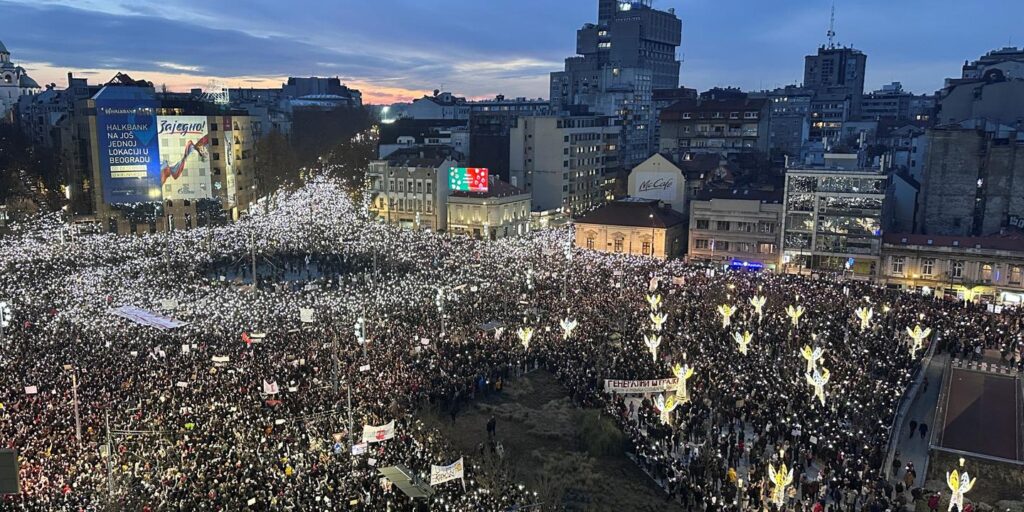
Opposition parties have seized on the scandal, organising street protests and demanding a full parliamentary inquiry, while the media’s relentless use of the term “hajka” has cemented the narrative of a massive patronage network. Internationally, the involvement of a Kushner‑linked consortium has raised eyebrows in Washington and Brussels; the European Union, monitoring Serbia’s accession progress, has called for greater transparency in public‑private partnerships, though it has stopped short of sanctions. The episode has already dented Serbia’s image as a stable investment destination, with Finance Minister Siniša Mali warning that the loss could deter future foreign direct investment.
If the criminal cases result in convictions, Vučić’s promised pardons could erode public confidence in the rule of law. Conversely, should the parliamentary law stand and construction proceed, Serbia will be locked into a century‑long lease that locks away potential revenue and entrenches the financial damage of the “hajka”. Either outcome will shape the country’s democratic trajectory, testing whether the nation can break free from entrenched patronage or will remain mired in a scandal that has already cost it €750 million.
Image Source: www.lemonde.fr