
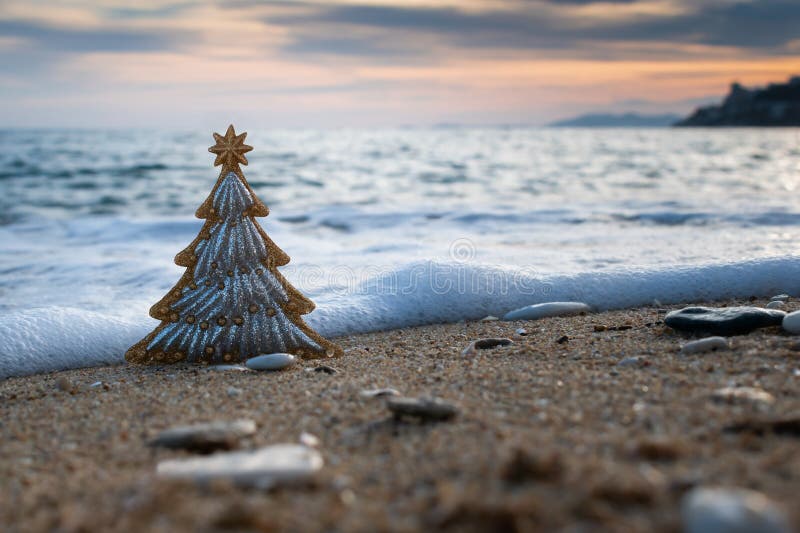

The Estonian coastline is being bolstered not with concrete barriers but with a forest of discarded Christmas trees, a low‑cost experiment that could reshape how small towns fight rising seas. In Pärnu County, volunteers have already sunk hundreds of trunks into the back‑shore, letting the wind‑blown sand pile up around them to form a living dune that dampens wave energy. The sight – rows of dark, needle‑clad trunks standing like a seasonal fence against the tide – has become a seasonal staple, captured in on‑site photographs that show families hauling the trees from municipal collection points straight onto the sand.
The mechanics are simple enough to be replicated anywhere: after the festive season, local waste‑management services gather the trees, municipal crews or volunteers transport them to the shoreline, and the trunks are planted perpendicular to prevailing waves. As the wood slows the sand’s movement, a vegetated ridge gradually emerges, theoretically providing a buffer that can survive for up to four years while the decaying material releases nutrients into the dune ecosystem. Researchers note that healthy dunes can accumulate two to four feet of sand per year, a rate that could be accelerated by the added woody debris.
Yet the most striking omission in the public record is any hard number on how much coastline has actually been protected. The pilot, launched in autumn 2023, is frequently cited in media stories, but none of the nine news sources or eight academic papers reviewed disclose a kilometre‑scale measurement – whether it is a modest 0.5 km or a more ambitious stretch approaching a kilometre. Without that baseline, comparing the initiative to other nature‑based solutions or calculating cost‑effectiveness per kilometre remains speculative.
Environmental scientists at the University of Tartu stress that anecdotal success is not enough. They argue that rigorous monitoring – pre‑ and post‑installation topographic surveys, periodic shoreline change analysis, and wave‑energy attenuation tests – is essential to move the project from a clever local hack to a scientifically validated model. So far, no peer‑reviewed study or official monitoring report has been published, leaving the programme’s impact on erosion rates and sediment loss unquantified.
Funding and scaling plans are equally opaque. While a report mentions that 58 000 trees were harvested in 2024 for dune‑stabilisation, it does not break down how many reached the coast or what money underpins the effort. Municipal budgets, EU LIFE‑Coast‑Resilience grants, or other financial streams have not been disclosed. Media narratives occasionally reference an ambition to protect roughly five kilometres of shoreline by 2028, but without documented grant agreements or strategic plans, that target remains unverified.
The broader European climate‑adaptation agenda does allocate substantial resources – the 2023 LIFE Programme earmarked €86 million for new strategic projects, with Estonia receiving a sizeable €29.9 million for a water‑quality scheme – yet the link to the Christmas‑tree dunes is tenuous at best. If the initiative can secure transparent financing and pair community enthusiasm with rigorous scientific oversight, it could become a replicable blueprint for post‑communist coastal towns grappling with sea‑level rise.
In the meantime, the trees continue to line the sand, offering a tangible reminder that climate resilience can sometimes be as simple as turning a festive after‑thought into a defensive line.
Sidebar: DIY Christmas‑Tree Dune Reinforcement
1. Collect: Arrange a post‑Christmas pick‑up with your local council or waste‑management service. Aim for whole trunks; branches can be trimmed later.
2. Transport: Use a small trailer or a sturdy wheelbarrow. Position the trees upright, spacing them roughly one metre apart, perpendicular to the dominant wave direction.
3. Plant: Dig shallow trenches (30‑40 cm deep) in the back‑shore and embed the trunks, leaving the top exposed. Backfill with sand and tamp gently.
4. Monitor: Take photos after each storm and note any sand accumulation. A simple stake‑and‑ruler method can track dune growth over months.
5. Maintain: Replace any trunks that decay beyond four years to keep the barrier effective.
By following these steps, coastal residents can contribute to a living defence that not only protects the beach but also recycles a seasonal waste product.
Image Source: www.dreamstime.com