
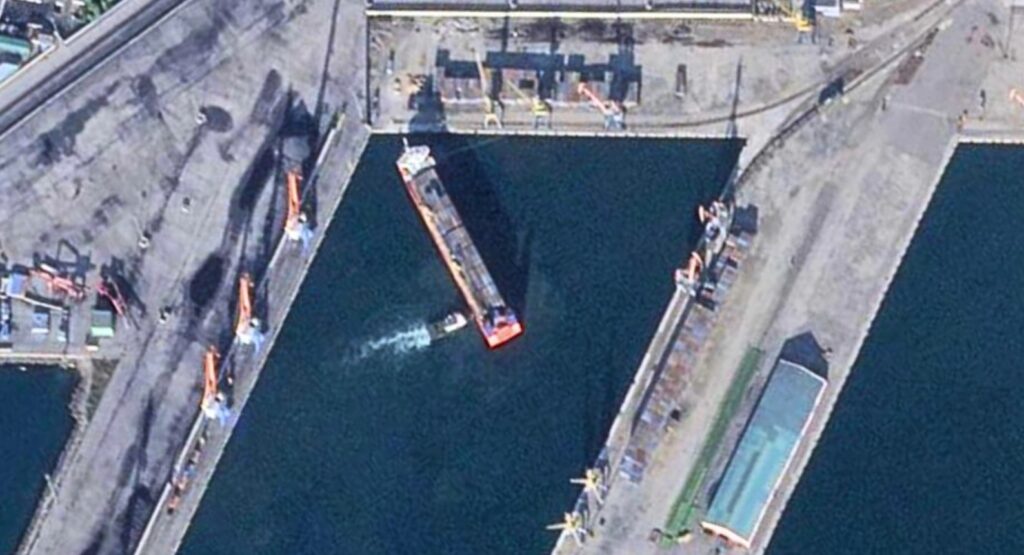

The first crack in the Baltic’s quiet waters came at 1 a.m. on 1 March 2025, when a Russian‑flagged container ship, the Adler, was boarded by Swedish customs officers in the Øresund Strait. The operation, described by authorities as “smooth”, was the latest salvo in a campaign that has already begun to redraw shipping lanes across the northern sea. It is a stark reminder that sanctions are not merely fiscal tools – they are now a high‑stakes game of maritime chess, where a single vessel can trigger a cascade of legal, operational and security ripples.
The EU’s sanctions regime, widened earlier this year to cover an additional 41 “shadow‑fleet” ships, now lists 597 Russian‑flagged tankers and cargo vessels that are barred from EU ports and denied maritime services. The Adler, owned by M Leasing LLC – a company on both EU and U.S. sanctions lists and tied to Russia’s military complex – was one of those black‑listed ships. Its presence off Höganäs was not a deliberate evasion; the vessel had suffered a motor failure and sought repairs in Swedish territorial waters, only to be stopped by the combined forces of Customs, the Coast Guard and the national police.
Legally, the boarding rested on the EU Council decision of 18 December 2025, which imposes a port‑access ban and prohibits the provision of maritime services to any vessel on the shadow‑fleet register. Swedish authorities had to tread carefully, reconciling the EU’s collective enforcement mandate with international law’s respect for a foreign‑flagged ship’s right to free navigation. The operation was therefore not a unilateral act of aggression but a calibrated application of EU law within the bounds of the United Nations Convention on the Law of the Sea.
The procedural details reveal a tightly coordinated multi‑agency effort. Police National Operations Department officers and security service agents were on hand, while the Coast Guard, lacking its own boarding boats, provided logistical support. After the vessel’s crew remained aboard until the afternoon, Swedish Customs entered an administrative phase, noting that the Adler and its owners appear on several sanctions lists. No public disclosure followed regarding the cargo, leaving the case under investigation but signalling that the authorities likely found no contraband or had yet to complete a full review.
The ripple effects on Baltic trade are already visible. Gdańsk, Poland, recorded an 8.2 % rise in container and general cargo traffic in 2023, a direct consequence of traders diverting flows away from Russian ports. Meanwhile, Klaipėda, Lithuania, saw a 20 % decline in fertiliser exports, reflecting the ban on Belarusian and Russian‑origin goods. St. Petersburg’s container throughput fell by 70 % by late 2023, and Kaliningrad’s strategic position between Poland and Lithuania has grown increasingly precarious. These figures illustrate a clear realignment of shipping routes that will likely persist as the sanctions regime tightens further.
Security experts point to an escalating risk profile for enforcement operations. Swedish naval observations confirmed armed personnel – presumably private security contractors – on several shadow‑fleet vessels, a tactic designed to deter interdiction. Coupled with a growing presence of Russian warships in the Baltic, the environment has become more volatile, demanding heightened coordination between coast guard, customs and military units to safeguard personnel and maintain rule of law.
Maritime law scholars note that the Adler boarding exemplifies the EU’s capacity to enforce sanctions within its territorial waters while respecting the legal rights of foreign‑flagged ships. They argue that the operation demonstrates a precedent for future enforcement, signalling to other states that the EU’s sanctions will be applied with precision and legal backing. At the same time, the incident underscores the need for robust, flexible protocols that can adapt to the evolving tactics of sanctioned operators, from armed guards to covert cargo movements.
In sum, the Adler case is more than a single boarding; it is a microcosm of the broader struggle over maritime sovereignty, international law and geopolitical influence in the Baltic. As EU sanctions continue to expand, the region will witness further shifts in trade patterns, heightened security measures and a sharpening of the legal frameworks that govern the high seas. The Swedish operation has set a clear precedent: sanctions are now enforced with the same vigor at sea that they are applied on land, and the world will be watching to see how the rest of the shadow fleet responds.
Image Source: militarnyi.com