
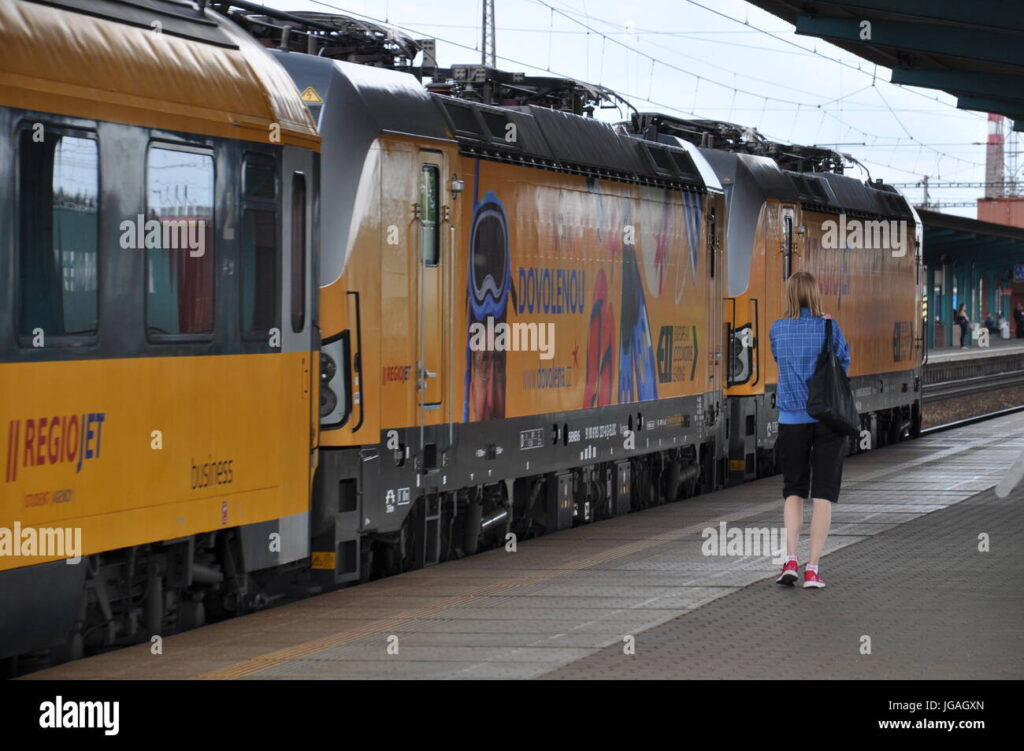

RegioJet has rolled out six extra daily trips on the Polish Tricity corridor, with the first services already running since 19 January. The private open‑access operator is pitching the new timetable as “high‑quality, affordable” travel, offering tickets from 39 zł for Gdańsk‑Gdynia‑Sopot to Warsaw and 69 zł for the longer Warsaw‑Kraków link.
The upgrade adds three additional train pairs – three north‑south round trips – to the existing long‑distance schedule, covering the main Tricity‑Warsaw and Tricity‑Kraków corridors. RegioJet’s announcement frames the move as a strategic push to capture price‑sensitive commuters and occasional travellers, positioning the yellow‑liveried trains as a fresh alternative to incumbent services.
On the platform we heard commuters echo the operator’s optimism. A daily traveller from Gdańsk to Warsaw welcomed the lower fare, saying the price point makes rail a viable option against the car. Another passenger heading to Kraków highlighted the convenience of more departure times, noting that the extra services “give us real flexibility” when planning weekend trips. Both reflected the “very positive feedback” RegioJet reports from its early customers.
What remains opaque, however, is the exact lift in seat capacity. RegioJet’s press material describes the number of new train pairs but provides no details on the type of coaches or the number of seats per train. Consequently, analysts cannot quantify the daily additional passenger places, forcing any demand‑absorption estimates to rely on generic figures for the operator’s standard inter‑city sets rather than hard data.
The financing picture is equally thin. While EU transport programmes such as the Connecting Europe Facility are routinely cited in policy circles, none of the public documents link a specific grant or subsidy to the Tricity frequency boost. Polish ministry releases also omit any mention of national co‑funding. Without disclosed grant numbers or contract values, the proportion of market‑driven revenue versus public support remains unclear, raising questions about the long‑term fiscal sustainability of the service.
Despite these data gaps, the frequency uplift and low‑price strategy are poised to reshape commuter behaviour. More departures reduce headways, making rail a credible rival to car travel for workers shuttling between the coast and the interior. The affordable fares lower the cost barrier for inter‑regional trips, potentially spurring labour‑market integration, tourism, and business exchanges across the Baltic‑North‑Sea axis. Moreover, the expansion dovetails with broader EU goals of strengthening trans‑European corridors and promoting rail as a sustainable transport mode.
In sum, RegioJet’s six‑trip‑a‑day addition marks a tangible step toward a more interconnected Central and Eastern European rail network. Yet the lack of disclosed seat‑capacity figures and transparent funding arrangements hampers a full assessment of its impact. As the services settle into regular operation, forthcoming passenger surveys, infrastructure authority reports, and EU funding registers will be essential to gauge whether the optimism on the platform translates into measurable ridership growth and lasting regional cohesion.
Image Source: www.alamy.com