
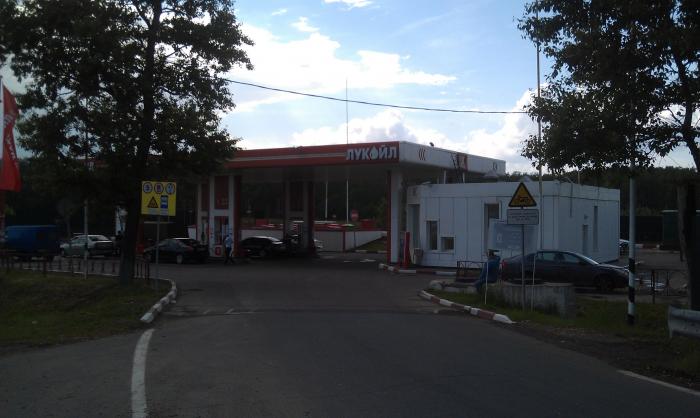

Moldova has ripped the lid off a Russian‑owned fuel hub, seizing Lukoil’s terminal at Chișinău airport in a move that reads like a declaration of war on Moscow’s energy lifelines. The decision, unveiled by Prime Minister Aleksandr Muntian in December, is the most audacious application of Chişinău’s new security‑focused investment rules and a stark signal that the country will no longer tolerate sanctioned Russian assets on its soil.
The terminal, perched beside the capital’s main airfield, has long been the backbone of Moldova’s fuel supply chain, handling a sizeable share of the diesel and gasoline that keep the nation’s transport and industry moving. Its strategic location meant that any disruption could ripple across the whole economy, making it a prized prize for both Moscow and the West. By targeting this piece of infrastructure, Chişinău is striking at the heart of its own energy dependence while simultaneously choking a revenue stream that funds Russia’s war in Ukraine.
The legal scaffolding for the seizure rests on Law 33/2025, an amendment to the 2021 foreign‑investment code adopted on 27 February and enforced from 20 April. The change re‑classifies energy infrastructure as a “sector of strategic national security” and obliges any investment in such areas to obtain prior clearance from the Council for Promotion of Investment Projects of National Importance. Crucially, the law bars investors who have appeared on EU, UN or US sanctions lists – a criterion Lukoil unmistakably meets – and forces a re‑examination of any approved deal that later proves a security threat. The Interinstitutional Supervisory Council’s December decree cemented the action, explicitly tying it to the United States Treasury’s October sanctions on two Russian oil giants and framing the confiscation as a domestic implementation of those international measures.
From an EU perspective, the operation is a textbook case of alignment with Western policy. By embedding EU‑style restrictive‑measure lists into its domestic screening, Moldova demonstrates that it can translate sanctions on paper into concrete, enforceable steps on the ground. Brussels is likely to view the move as a boost to Chişinău’s credibility in accession talks, showcasing a willingness to fortify the rule‑of‑law and security apparatus that the Union demands of prospective members. The seizure is also being underpinned by hard infrastructure: the newly completed Vulcanesti‑Chișinău power line and a suite of cross‑border interconnections with Romania are already channeling electricity and, potentially, alternative fuel supplies, reducing the immediate shock to the domestic market.
Romania, Moldova’s closest EU ally, has mirrored the strategy with its own legislative push. A draft bill announced on 27 November and a decree signed on 2 December grant the Romanian state sweeping surveillance powers over companies caught in sanctions, explicitly naming Lukoil’s refinery in Ploieşti and its national gas‑station network as candidates for temporary state control. The synchronised approach creates a regional safety net, allowing both capitals to present a united front against Russian energy assets and to pool resources for alternative supply routes. The bilateral energy corridor, bolstered by the Vulcanesti line, now stands as a tangible embodiment of that cooperation.
Russia’s response so far has been limited to diplomatic protest and the usual rhetoric of unlawful expropriation, with no concrete retaliatory measures recorded in the sources. Nonetheless, analysts warn that Moscow could resort to legal challenges under bilateral investment treaties, diplomatic pressure in multilateral forums, or targeted economic squeezes that threaten other Moldovan exporters. In the short term, the loss of Lukoil’s terminal may cause a hiccup in fuel deliveries, but the government’s pre‑emptive diversification strategy – tapping Romanian pipelines and EU‑backed energy assistance – is designed to blunt any supply shock.
The broader fallout marks a decisive shift in Eastern Europe’s energy‑security landscape. By stripping a Russian‑controlled fuel hub, Moldova is actively de‑Russianising critical infrastructure, tightening its integration with the EU grid, and setting a legal precedent that other post‑Soviet states may follow. The move sharpens the geopolitical fault line with Moscow, but it also cements a new, more resilient energy architecture anchored in European cooperation and fortified by robust domestic law.
Image Source: wikimapia.org