

The High‑North is heating up faster than the Arctic ice, and Greenland now sits at the centre of NATO’s most dangerous diplomatic tug‑of‑war. Washington, under President Donald Trump, has openly warned that if the United States does not claim a “permanent foothold” on the island, Russia or China will, and it has hinted that force could be on the table. Europe, by contrast, has rallied around Danish sovereignty, branding any U.S. “conquest” as “totally unacceptable”.
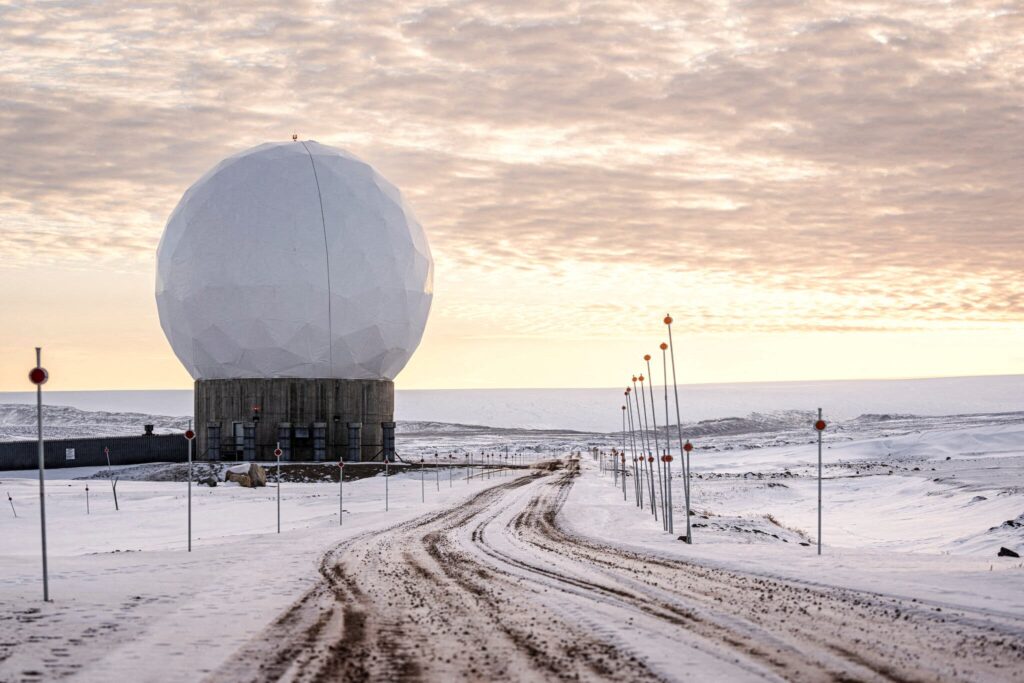
Strategically, Greenland is a linchpin. Its position on the shortest trans‑Atlantic flight routes, the presence of the U.S.‑operated Pituffik Space Base, and its proximity to emerging Arctic sea lanes make it a premium asset for power projection and early‑warning capabilities. More than a hundred U.S. troops already reside at Pituffik, and the Denmark‑U.S. defence pact grants Washington the right to bring additional forces to the island at will – a clause that Trump has now weaponised as a bargaining chip. For NATO, the island offers a forward‑looking platform to monitor Russian activity in the Fram Strait and to counter China’s growing ice‑breaker fleet.
Within the alliance, the debate has split along a clear Atlantic line. NATO Secretary‑General Mark Rutte declared the Arctic a “common interest” and hinted at a new NATO Arctic mission, but no concrete plan has emerged. European capitals – France, Germany and the United Kingdom among them – issued a joint declaration that “Greenland belongs to its people”, insisting that any decision must rest with Denmark and Greenland alone. Danish Foreign Minister Lars Lokke Rasmussen echoed this sentiment, calling Trump’s talk of “conquering” Greenland “totally unacceptable”. Greenland’s own government echoed the NATO‑wide interest in defence while flat‑out rejecting any U.S. takeover “under any circumstances”.
The divergence threatens to fracture the alliance’s core principle of collective defence. If Washington were to unilaterally expand its garrison or install new assets without Danish consent, Europe could refuse to treat those forces as part of NATO’s Article 5 umbrella. Such a split would not merely be a diplomatic spat; it would undermine the credibility of NATO’s deterrence, leaving the High North vulnerable to misinterpretation and accidental escalation.
Russia and China are poised to exploit any fissure. Moscow has already signalled intent to increase naval deployments in the nearby Fram Strait, while Beijing is expanding its ice‑breaker fleet and surveillance capabilities in the Arctic. An overt U.S. buildup on Greenland would give both powers a pretext to accelerate their own Arctic footprints, heightening the risk of dangerous encounters between NATO and adversary forces in a region where ice‑free routes are rapidly becoming strategic highways.
Three escalation pathways loom. First, a unilateral U.S. deployment that bypasses Danish approval could trigger a political rift over the applicability of Article 5. Second, European allies might collectively refuse to recognise any U.S.‑initiated foothold as NATO‑covered, effectively creating a de‑facto split in the alliance’s defence guarantee. Third, heightened Russian and Chinese activity in response to an American surge could spark inadvertent clashes, turning a regional dispute into a broader East‑West flashpoint.
The stakes are stark: a mis‑calculation on Greenland could unravel NATO’s cohesion, embolden Moscow and Beijing, and open a new front in the great‑power rivalry. The alliance must swiftly craft a joint Arctic framework that respects Danish‑Greenlandic sovereignty while preserving the strategic utility of the island. Only a calibrated, consensus‑based approach can defuse the false calculation threatening to ignite a new crisis in the High North.
Image Source: www.nytimes.com