
Three Russian border guards set foot on Estonian soil at Vasknarva pier on 17 December, sparking an immediate security alert and a flurry of diplomatic protest. Video released by Estonia’s Police and Border Guard Board shows the officers marching across the temporary control line (TCL) that separates the two sides of the Narva River before being intercepted by Estonian border police. The incursion – described by Tallinn as “illegal” – has already ignited a heated debate over the fragility of the Estonia‑Russia frontier.
The trio were conducting a routine patrol of the river’s navigation channel when they misread the exact position of the TCL and stepped onto the pier, which is technically Estonian territory. Surveillance cameras and a border‑guard drone captured the breach, prompting a rapid response from nearby Estonian patrols. Local residents, alarmed by the sudden presence of foreign uniformed personnel, reported the incident to authorities, and the border police swiftly escorted the Russians back across the line.
Within hours, the Ministry of the Interior classified the event as an illegal incursion and lodged a formal diplomatic protest with Moscow. The Foreign Ministry summoned the Russian ambassador in Tallinn, demanding an explanation and an apology. Interior Minister Igor Taro called the motives “unclear” but stressed that there was no immediate security threat, while the Defence Forces raised the alert level on the eastern border, dispatching additional patrol units and aerial reconnaissance to monitor the Narva corridor.
Moscow’s response has been cautious, with the Russian border representation offering a statement of regret but stopping short of an outright apology. In retaliation, Estonia has temporarily suspended several joint river‑traffic agreements pending a review of crossing protocols, and a bilateral meeting is slated for early next week to defuse the tension. The episode has laid bare the historic “Vasknarva anomaly” – a patchwork of arrangements governing vessel movement between the Narva River and Lake Peipus – and highlighted the absence of a fully ratified treaty demarcating the TCL.
In the wake of the breach, Estonia announced a joint technical working group with the EU’s Border Assistance Mission (EU BACIS) and NATO’s Baltic Cooperation Group to overhaul the line’s demarcation. The task force will conduct a GIS‑mapping exercise, install permanent GPS‑linked markers and deploy real‑time monitoring sensors at critical crossing points. By turning a vague, paper‑based line into a digitally tracked border, officials hope to eliminate the kind of human error that precipitated the Vasknarva incident.
NATO’s rapid‑reaction mechanisms have already been activated. Allied Command Transformation has shared the incident data across the alliance, prompting the Baltic Air Policing wing to increase flight patrols over the frontier. Frontex has offered logistical support for joint patrols and intelligence analysis, underscoring a growing trend of integrated NATO‑EU security operations that treat even accidental breaches as potential flashpoints.
Domestically, the Border Guard Board is overhaing its training curriculum to include scenario‑based simulations of accidental crossings and improving communication with local law‑enforcement agencies. New funding earmarks night‑vision and thermal‑imaging equipment to detect unauthorised movements during the low‑visibility winter months. An information campaign aimed at reassuring the public stresses the robustness of Estonia’s defensive measures and the backing of NATO allies, while a draft legal framework prepares the ground for swift diplomatic recourse – from recalling ambassadors to limited sanctions – should violations recur. The Vasknarva crossing may have been a misstep, but it has forced Estonia to confront the precariousness of its eastern flank and to cement a more resilient, technologically‑enhanced border regime before the next slip‑up.
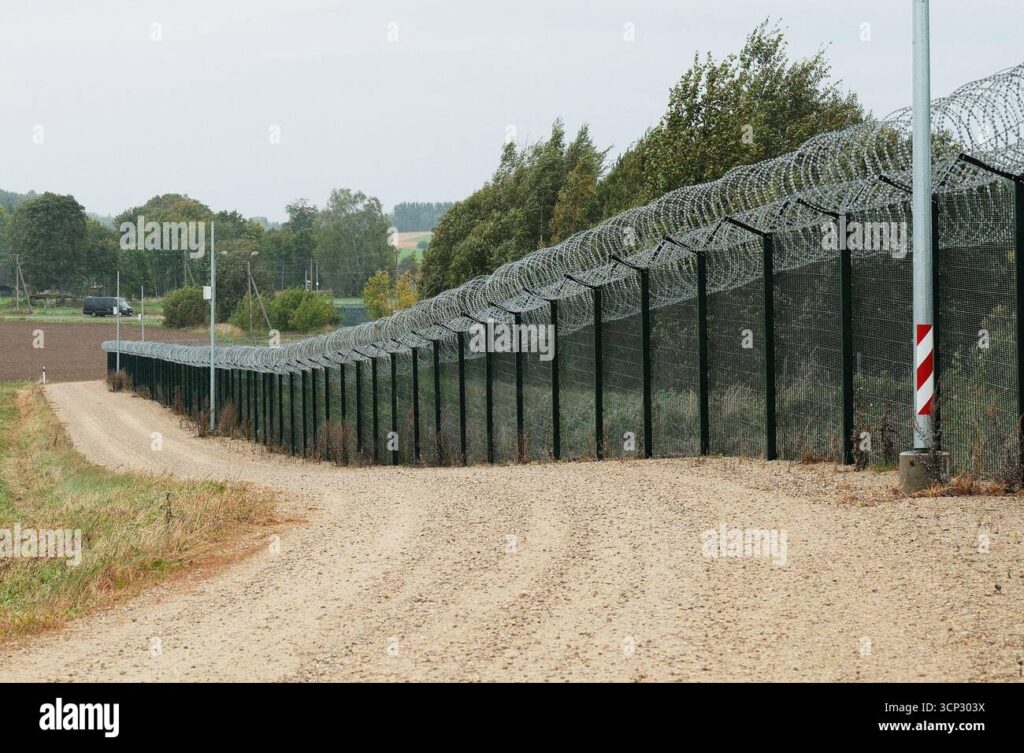
Image Source: www.alamy.com