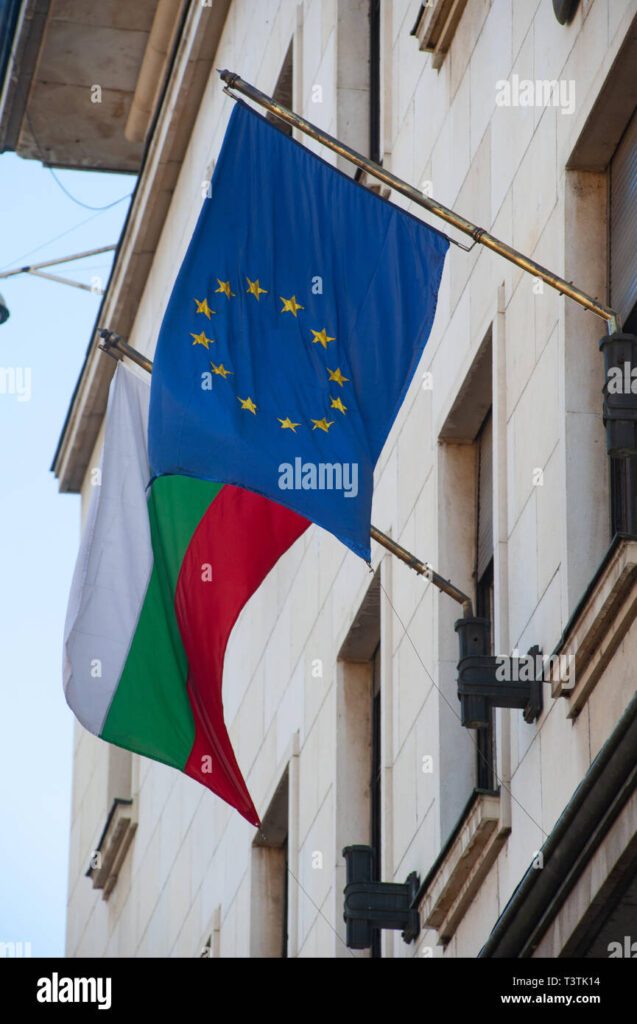

Bulgaria has once again slammed the door on any plan to hand over the frozen Russian sovereign wealth that the EU hopes to turn into cash for Kyiv. Even as Brussels touts a €2.5‑3 billion annual windfall, Sofia insists the legal ground is too shaky to let the principal leave the vaults. The result is a stand‑off that threatens to stall the Union’s most ambitious “frozen‑asset” scheme.
The legal argument is textbook EU‑law conservatism. Council Regulation 2022/247 froze Russian state assets but stopped short of confiscation, a line reinforced by the December 2023 decision that only interest – not the underlying capital – may be harvested. Bulgaria, together with Belgium, Italy and Malta, has repeatedly warned that Article 122 of the EU treaties limits emergency measures to temporary immobilisation, not outright seizure. By invoking the EU’s own property‑rights and proportionality principles, Sofia positions the “interest‑generation” model as the only legally defensible route, and any move to appropriate the €210 billion principal would, in its view, breach both EU and international law.
Domestically, the ruling coalition is teetering on a loss of legitimacy after a year of slipping poll numbers. A fragile parliamentary majority cannot afford a foreign‑policy flashpoint that could be weaponised by opposition parties or trigger Russian retaliation. Co‑ordinating its stance with like‑minded partners in Brussels gives Sofia a diplomatic shield and a louder voice in negotiations, turning a potentially isolating decision into a collective bargaining chip.
Public opinion backs the cautious line. An April 2024 Eurobarometer survey found that 62 % of Bulgarians oppose EU financing of military equipment for Ukraine – a figure that eclipses the EU‑wide average and signals deep scepticism about using Russian money against Russia. While the poll does not ask directly about confiscating the principal, the strong anti‑military‑aid sentiment can be read as a broader resistance to any high‑profile exploitation of the frozen assets.
EU officials have underlined the financial logic of the compromise. “The EU projects an annual yield of €2.5–3 billion from the frozen assets,” a spokesperson said, noting that net profits between 15 February and 30 April 2024 already amounted to €557 million and will be funneled through the European Peace Facility, with 90 % earmarked for Ukraine’s defence and reconstruction. The message is clear: the Union is prepared to hand over revenue, not capital.
The convergence of strict legal interpretation, a precarious domestic coalition and a public wary of militarised aid explains why Sofia remains on the sidelines. By championing the interest‑generation scheme, Bulgaria can claim adherence to EU law, protect its political standing and echo the electorate’s caution, all while staying engaged in the modest, legally uncontroversial flow of profits to Kyiv.
Looking ahead, Sofia is unlikely to shift towards outright confiscation unless the EU revises its legal framework or the political calculus at home changes dramatically. For now, the Bulgarian government will continue to ride the narrow middle ground, supporting Ukraine only through the modest stream of interest that the EU deems permissible.
Image Source: www.alamy.com