
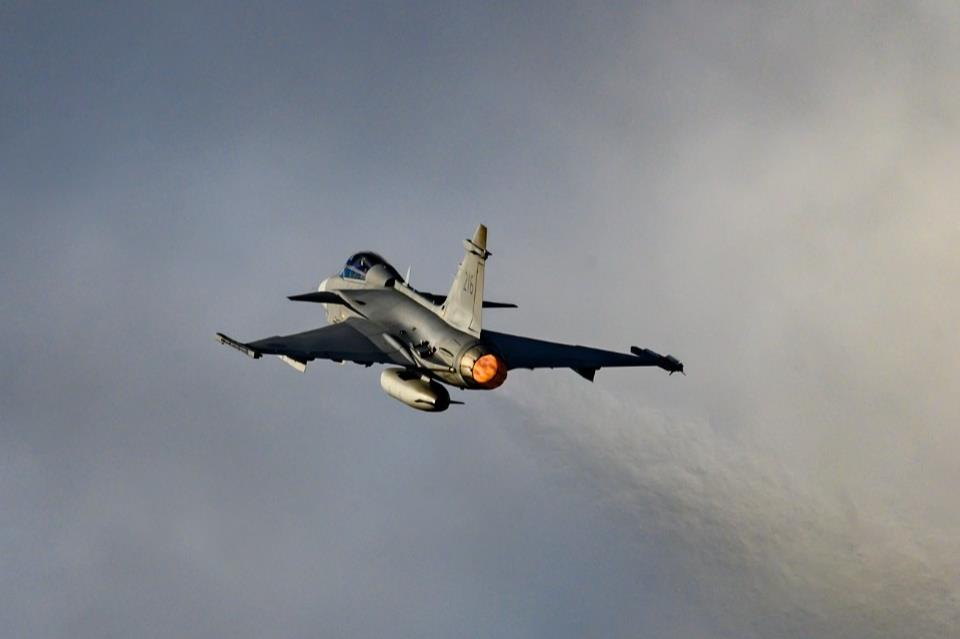

Polish F‑16s swooped on a Russian Il‑20 over the Baltic Sea in the last days of December, underscoring how quickly NATO’s air‑policing net can be activated when Moscow’s aircraft stray into protected airspace. The swift interception, carried out by the 22nd Tactical Squadron, was the latest flash in a series of Russian incursions that have been testing the Alliance’s resolve throughout 2025.
Q: What exactly happened and how was the Il‑20 identified?
A: Polish radar picked up an unknown object approaching from Belarus, prompting a temporary closure of civilian airspace over the Podlaskie region. Two F‑16 Fighting Falcons were scrambled, achieved visual identification of the Il‑20 reconnaissance plane and escorted it out of the sector over international waters. The Russian aircraft turned away without incident, and Polish officials stressed that the breach was fully under control.
Q: How does NATO’s air‑policing architecture respond to such breaches?
A: The Baltic Air Policing (BAP) mission provides a 24‑hour fighter presence for Estonia, Latvia, Lithuania and the surrounding maritime zone. When an unauthorised aircraft is detected, the nearest Quick‑Reaction‑Alert (QRA) unit – in this case Poland’s F‑16s – is tasked to intercept, identify and, if necessary, escort the intruder out of NATO airspace. Command and control flow from SACEUR through Allied Air Command in Ramstein to three Combined Air Operations Centres that monitor up to 30,000 movements daily. The rules of engagement, rooted in Article 51 of the UN Charter and the Chicago Convention, allow only a last‑resort use of lethal force after radio warnings and visual identification.
Q: Is this incident isolated or part of a broader pattern?
A: It fits a clear upward trend. Since September 2025, Estonia has suffered four airspace violations, including a three‑minute incursion by three Russian MiG‑31s that triggered an Article 4 request. In August, a mixed fleet of Russian transport and fighter aircraft entered Baltic airspace, prompting RAF Typhoons to shadow them. The Polish interception was accompanied by reports of “several dozen objects” crossing from Belarus, some identified as smuggling balloons. Analysts view the frequency and low‑altitude nature of these flights as deliberate Russian probing of NATO’s detection and response loops.
Q: What do the experts say about the strategic implications for the Baltic region?
A: Defence analysts warn that each peaceful interception reduces the margin for error, raising the risk of miscalculation. The Suwałki Gap – the narrow land corridor linking Poland and Lithuania – remains a choke point that could be isolated if air‑space control falters. Divergent NATO attitudes, with Poland pushing for a tougher stance while Germany, France and the UK advocate restraint, create a diplomatic fault line that Moscow could exploit. Nonetheless, the rapid deployment of Polish F‑16s demonstrates that the Alliance’s deterrent remains credible and that the QRA system can respond within minutes.
Brief on regional air defence:
The BAP rotation typically fields four fighters and 50‑100 support staff on a three‑month cycle, complemented by Poland’s national QRA capability of nearly 20,000 soldiers on standby during the holidays. Since September 2025 the Alliance has bolstered its eastern flank with the Eastern Sentry reinforcement plan, adding extra air‑defence assets and enhanced radar coverage. Integrated surveillance across the Baltic states and Poland aims to close detection gaps for transponder‑off aircraft, while ongoing discussions seek a consensus on rules of engagement to harmonise member‑state responses.
In short, the Polish interception of the Il‑20 is a vivid reminder that NATO’s air‑policing shield is both a deterrent and a potential flashpoint. Maintaining a robust, coordinated QRA network and a clear, unified stance on the use of force will be essential to keep the Baltic skies from slipping from a controlled escort into a dangerous escalation.
Image Source: militarnyi.com