
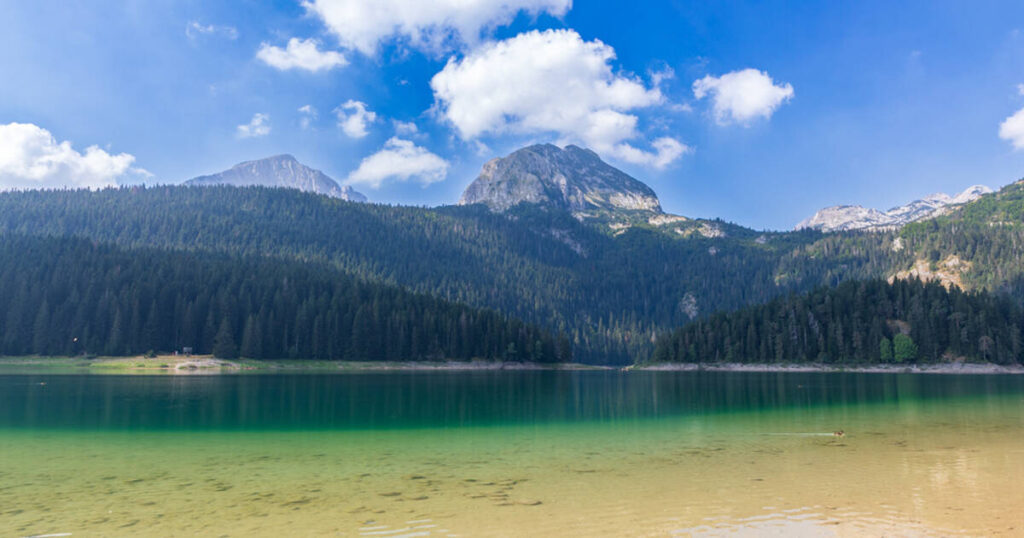

The director of Durmitor’s tourist centre has been hauled into the limelight after a German tourist’s complaint triggered an investigation into missing paperwork. The incident, which unfolded on a snow‑clad trail in Montenegro’s national park, has exposed a chasm between the country’s touted 2024 tourism law and the on‑the‑ground reality that locals and visitors alike must navigate.
When the German tourist, who was touring the area with a small guide group, alleged that his accommodation had failed to meet promised safety standards, the centre’s director swore he held all required licences and permits. Yet police records indicate that the centre’s documentation has not been formally verified by the Ministry of Tourism, leaving the case hanging in limbo. The director’s claim that “everything is in order” clashes with the fact that the 2024 Law on Tourism and Hospitality, the cornerstone of Montenegro’s regulatory overhaul, offers no explicit step‑by‑step licensing procedure in its publicly available text. In other words, the legal framework that should ensure compliance is itself a bit of a black box.
Legal scholars point to this opacity as a systemic flaw. Dr Elena Marković, a professor of tourism law at the University of Belgrade, argues that the absence of clear licensing and liability guidelines undermines consumer confidence. “When tourists from Germany, the UK or elsewhere book a stay, they rely on the host nation’s statutory safeguards,” she says. “If those safeguards are not codified or are difficult to verify, the risk of fraud or misrepresentation rises.” Marković cautions that the general consumer‑law provisions—rooted in a 2011 act and amended in 2020—do not extend to the specificities of terrestrial tourism operators, leaving a regulatory void.
At the national level, Montenegro’s 2024 legislation is meant to modernise licensing, enhance consumer protection and streamline liability. But the law’s public excerpts reveal that key details—such as municipal registration requirements, health‑and‑safety inspections and environmental compliance—are missing. Likewise, the consumer‑protection clauses that should guard foreign visitors are not tourism‑specific, and the statutory liability limits are absent. In practice, this means that a tourist centre can operate without a clearly documented licence, while a foreign visitor has no formal recourse should an incident occur.
The situation is mirrored in the wider Western Balkans. The Regional Cooperation Council’s 2024 Tourism Policy Assessment, while ambitious, offers little concrete information on how tourist‑centres are licensed or how fraud is prosecuted. Nevertheless, the region benefits from a robust cross‑border enforcement network. Eurojust’s Western Balkans Criminal Justice Project has supported multiple joint investigations into drug trafficking, money laundering and counterfeiting, and its Regional Consultative Forum in Budva has sharpened cooperation between Montenegro’s prosecutor’s office and neighbouring states. These mechanisms suggest that, should the Durmitor case spiral into a larger fraud investigation, authorities have the institutional capacity to pursue it across borders.
Historically, Montenegro’s tourism regulation has evolved through a series of incremental reforms. The 2011 Consumer Protection Act laid the groundwork for protecting visitors, while the 2020 amendments broadened those protections. The 2024 law represents a bold attempt to consolidate licensing and liability under a single umbrella, but the lack of detail indicates that the transition is still incomplete. Regional initiatives, such as the EU‑funded Tourism Development and Promotion project, aim to standardise quality across the Balkans by offering small grants for infrastructure upgrades and by drafting joint tourism routes. Yet the success of these projects hinges on clear national legislation that can be enforced locally.
In the end, the Durmitor incident underscores a broader crisis of clarity. Tourists are left to trust an unverified system; local businesses risk operating without a defined legal framework; and regulators are hampered by vague statutes. For the Western Balkans to attract the level of international tourism it aspires to, the 2024 law must be fleshed out, made publicly available and, most importantly, enforced. Until then, incidents like this will continue to flash the cracks in a system that is still in the process of defining its own rules.
Image Source: whc.unesco.org