
The European Investment Bank’s latest €175 million loan for a new Polish power plant is not just a tidy line on a balance sheet – it’s a loud statement that Brussels is willing to bankroll a shift away from coal. In a region still haunted by the legacy of heavy industry, the move signals a decisive push toward a cleaner, more secure energy future.
Yet the public record offers little in the way of concrete numbers. No figures on jobs, GDP lift, or emissions cut have been released, leaving analysts to piece together the story from the broader tapestry of EU‑financed projects in Poland. The absence of detail is a stark reminder that financing is only the first domino; the real impact will be measured when construction starts and the plant plugs into the grid.
Economically, the picture is ambiguous. While the €175 million loan itself is a sizable commitment, it does not reveal the full investment envelope or the multiplier effect on local supply chains. By contrast, the BC‑Wind offshore wind farm – another EIB‑backed endeavour – is expected to power roughly 500 000 households. Even without hard data, the BC‑Wind example suggests that EU money can spur significant construction activity, create temporary employment, and eventually secure long‑term operational roles for local firms.
Environmental gains are equally elusive. No projections for greenhouse‑gas reductions, air‑quality improvements, or water‑use savings accompany the Polish plant announcement. The BC‑Wind project, however, delivers a clear environmental upside by displacing coal‑fired electricity with clean wind. It serves as a benchmark, underscoring the potential for EU‑funded infrastructure to meet Poland’s decarbonisation targets – a promise that the new plant will need to live up to once details emerge.
Behind the scenes, EU funding mechanisms are being wielded as strategic tools. The EIB’s loan is part of a broader push to lower financial barriers to large‑scale projects that align with EU climate ambitions. Coupled with Poland’s ten‑year grid upgrade plan – earmarking PLN 75 billion for transmission and distribution – the funding picture paints a holistic approach: new generation capacity must be matched by the infrastructure that delivers it to consumers.
Strategically, the loan represents EU confidence in Poland’s energy transition roadmap. Even without granular impact data, the financing signals that Brussels sees the country as a pivotal player in Central Europe’s shift toward resilience. It also underscores a broader European narrative: that climate action and energy security are inseparable, and that the EU is willing to invest heavily to keep its member states on track.
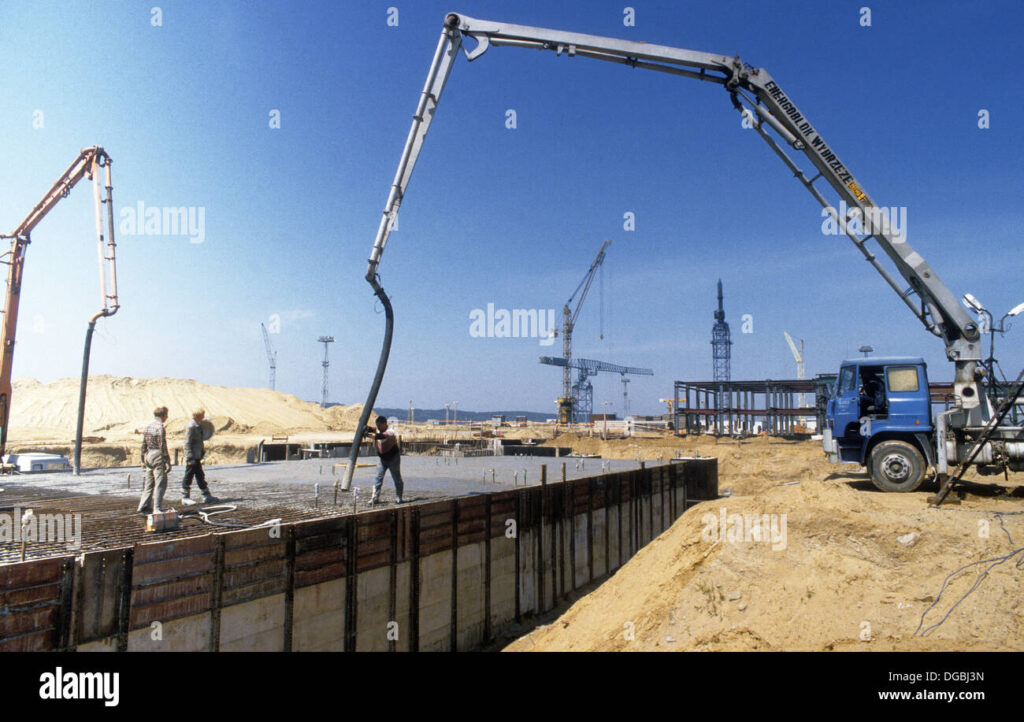
The real test will come as the project moves from paper to ground. Stakeholders, from local communities to national policymakers, must demand transparent, timely reporting on the plant’s economic ripple effects and environmental footprint. Only then can the €175 million loan be judged not merely as a financial transaction but as a genuine catalyst for a cleaner, more secure Polish energy landscape.
Image Source: www.alamy.com