
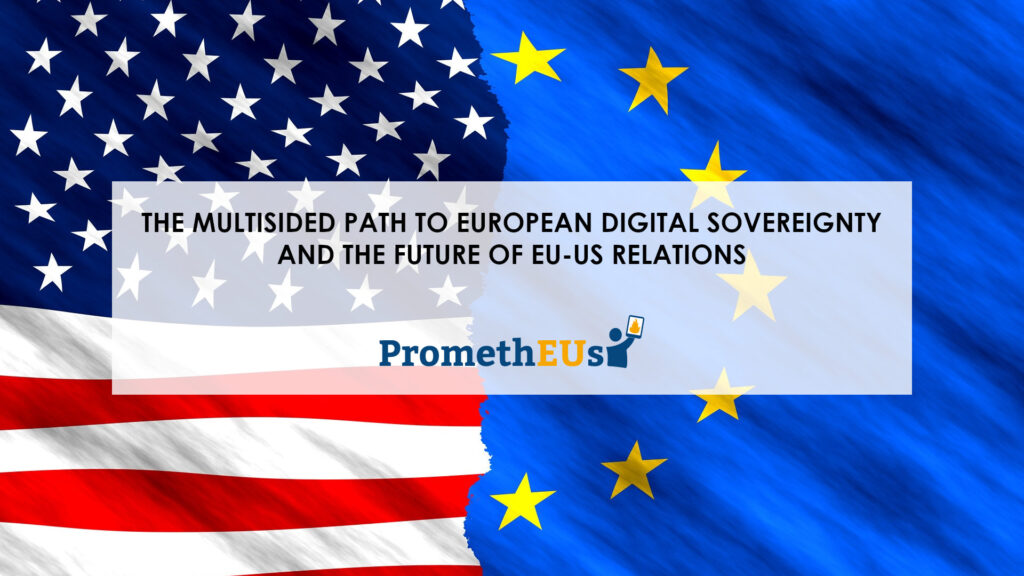

The United States has put the EU on notice: keep tightening the reins on American tech giants or face a full‑blown Section 301 assault, complete with fees, service bans and new tariffs. The warning was delivered on the very day Washington pledged NATO‑style security guarantees for Ukraine, turning a digital policy spat into a geopolitical flashpoint. For the fledgling digital ecosystems of Central and Eastern Europe, the stakes have never been higher.
Washington’s message, issued by the USTR, singled out a “watch‑list” that includes Siemens, Spotify, DHL and a host of other European heavyweights. By invoking Section 301 – the trade‑law tool used to sanction “unfair” foreign practices – the United States signalled it could slap fees on European firms, restrict their access to US cloud services and even widen the existing 15 % tariff regime that already haunts EU exporters. The threat is not abstract; it is a calibrated response to a suite of EU reforms that Washington deems discriminatory.
(1) US‑EU diplomatic notes
– USTR warning: potential fees, service restrictions, Section 301 investigation.
– Targeted firms: Accenture, Siemens, Spotify, DHL, SAP, Amadeus, Capgemini, Publicis, Mistral AI.
– Existing backdrop: 15 % tariffs on selected EU goods, looming digital‑services retaliation.
(2) European Commission proposals
– Digital Services Act (DSA) – VLOP duties for platforms with >45 million EU users: content‑moderation, systemic‑risk assessments, transparency reports, independent audits and data‑access channels for regulators. Non‑compliance can attract fines up to 6 % of global turnover.
– Digital Markets Act (DMA) – Gate‑keeper rules for firms exceeding €7.5 billion EU turnover (or €75 billion worldwide) and 45 million users: mandatory data‑sharing, prohibition of self‑preferencing, ability for users to uninstall pre‑installed apps, with penalties up to 10 % of global turnover.
– 3 % Digital‑Services Tax (DST) – levy on advertising and marketplace revenues earned by non‑EU digital firms, aimed at leveling the fiscal playing field with US giants.
These measures apply to any company that targets EU users, regardless of where it is incorporated. A startup in Warsaw that runs a marketplace for Lithuanian sellers, for example, must already meet the DSA’s audit and transparency demands.
(3) Impact on regional tech firms
The compliance price‑tag is staggering. Large platforms will need to pour hundreds of millions of pounds into AI‑driven moderation tools, legal teams, third‑party audit contracts and secure data‑access infrastructure. Mid‑size firms face a different nightmare: the need to redesign APIs for DMA data‑portability, fund continuous systemic‑risk assessments and absorb a 3 % tax on ad revenue that can shave billions off profit margins across the CEE ad‑tech landscape.
Beyond raw costs, the new rules erect fresh market‑entry barriers. Payment‑licence requirements under the upcoming PSD 3 and the AMLR demand higher capital buffers, discouraging early‑stage fintechs. The mandatory sharing of algorithmic logic under the DMA threatens proprietary advantage, while the looming US retaliation could inflate the price of US‑based cloud services, prompting firms to scramble for EU‑centric alternatives.
The competitive picture is mixed. U.S. giants such as Meta and Google will bear the same fines and taxes, potentially narrowing their cost advantage and giving home‑grown players a chance to capture market share if they can shoulder the compliance burden. Yet the very firms the US has singled out – Spotify, SAP, Siemens – are shielded by their size and may use the crisis to cement dominance, provided they survive any US‑imposed fees. A full‑scale trade clash would also jeopardise the cross‑border data flows that CEE firms rely on, forcing a costly migration to non‑American infrastructure.
Washington’s security guarantees for Kyiv are not a side note; they are a lever. By coupling a hard‑line trade stance with a firm commitment to defend Ukraine, the United States is pressuring EU capitals – especially those of post‑communist states that sit on the front line of the Russian threat – to weigh digital sovereignty against geopolitical stability. For policymakers in Prague, Bucharest and Tallinn, the calculus now includes protecting a fragile digital economy while maintaining the political goodwill that underpins Western security guarantees.
The bottom line for Central and Eastern European digital entrepreneurs is clear: treat the DSA, DMA and DST as immutable cost bases, not optional reforms. Early investment in compliance infrastructure, diversification away from US cloud providers and coordinated lobbying through a regional digital forum will be essential to weather the storm. Only firms that can navigate both the regulatory maze and the geopolitical cross‑currents will thrive in an increasingly contested global digital arena.
Image Source: www.i-com.it