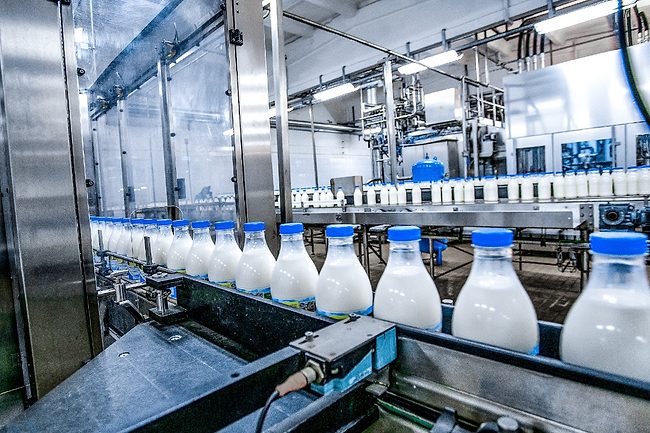

Orders at Žagarės dairy have exploded to roughly twice the volume it can currently churn out, leaving the Lithuanian processor scrambling for any spare capacity and a clear path to expansion. The surge is not a fleeting blip – it reflects a broader upswing in Baltic dairy demand that is now colliding with a maze of EU policy blind spots and an opaque rail network.
The market appetite is genuine. Žagarės’ sales team reports a flood of contracts from retailers and food‑service operators across the Baltic states, driven by a post‑pandemic push for locally sourced dairy and a regional shortage of high‑quality processed milk. With existing lines already operating at full tilt, the dairy’s management warns that without swift investment the company will be forced to turn away profitable orders, a scenario that would reverberate through the entire Baltic food‑processing chain.
Yet the financing landscape offers little relief. The 2023‑2027 Common Agricultural Policy pours €291.1 billion into agriculture, of which up to €270 billion is earmarked for direct income support. In practice, Žagarės finds the rules for accessing those funds as vague as a foggy morning. The Rural Development Programme – the EAFRD’s vehicle for processing‑capacity grants – lists no concrete eligibility criteria, grant sizes or timelines for Lithuanian dairy firms. The result is a strategic dead‑end: the money exists, but the roadmap to it is hidden, forcing the dairy to lean on internal cash or private capital for any plant extension.
Compounding the financing conundrum, the EU’s Common Market Organisation for milk imposes a trio of mandatory mechanisms – written contracts, collective‑negotiation limits and inter‑branch organisations – that lock processors into strict supply‑and‑price arrangements. Public‑intervention tools, while still available, are capped at 109 000 tonnes of skimmed‑milk powder and 50 000 tonnes of butter each year, and the private‑storage aid tied to those volumes only covers a maximum of 210 days. Žagarės can therefore expand its processing line only if it can guarantee a matching slice of a tightly bounded market, a gamble that any prudent CFO would hesitate to take.
The Green Deal and Farm‑to‑Fork Strategy have added another layer of complexity. Eco‑scheme payments now hinge on life‑cycle assessments and carbon‑footprint thresholds of 1.1–1.7 kg CO₂‑eq per kilogram of milk. While these incentives push the sector toward greener technology, the current catalogue of EU innovation funding – Horizon Europe, the 2025 Dairy Innovation Programme and related calls – remains a black box. The nearest guidance comes from Horizon Europe information sessions slated for January 2026, leaving Žagarės without a clear avenue to secure the low‑carbon grants it needs for modernising its plant.
On the logistics front, the picture is no less murky. No publicly available data detail the capacity or reliability of the Lithuanian‑Polish rail line or the Klaipėda freight hub, meaning Žagarės cannot plan rail shipments with any certainty. The only concrete rail development is the Rail Baltica corridor, which as of 5 February 2025 entered full construction and is expected to have 43 % of its mainline ready by the end of this year. While the corridor promises a high‑capacity freight route linking Lithuania to the wider EU network, it will not be operational in time to ease the current bottleneck. Recent EU railway‑interoperability regulation (16 July 2025) and the rail‑capacity optimisation rules (19 November 2025) signal a policy thrust toward smoother cross‑border traffic, yet they contain no specific provisions for the Lithuanian‑Polish segment that Žagarės relies on.
The takeaway is stark: Žagarės’ capacity crunch is not merely a plant‑floor issue but a symptom of mismatched policy signals and infrastructural opacity. To unlock the Baltic dairy boom, the EU must translate its massive CAP budget into processor‑friendly guidance, devise targeted innovation calls that speak directly to mid‑size dairies, and synchronise rail‑capacity planning with the timelines of projects like Rail Baltica. Only a coordinated overhaul of financing, market regulation and transport policy will allow Žagarės – and the wider Baltic food‑processing sector – to turn surging demand into sustainable growth.
Image Source: www.dairyprocessing.com