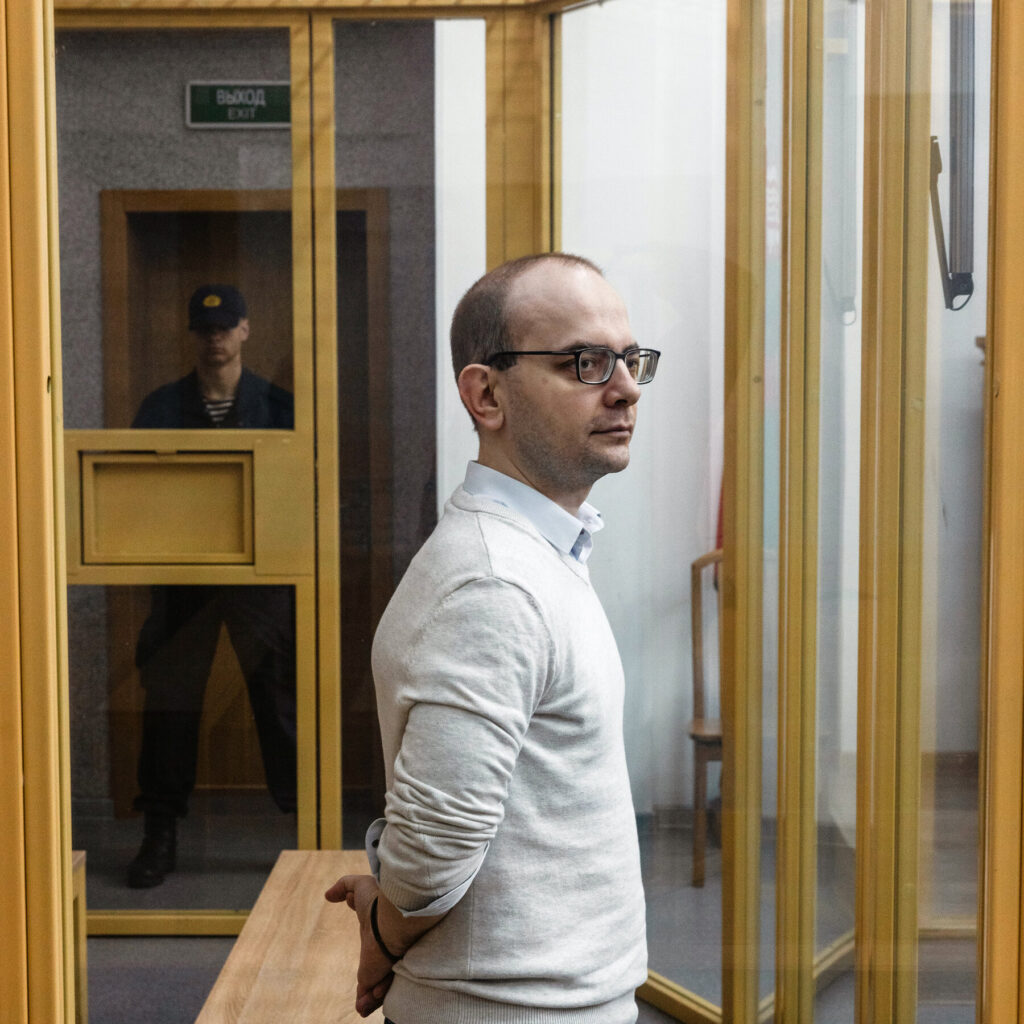

The Kremlin‑backed regime in Minsk has just turned a diplomatic trick into a headline: on 13 December it signed a presidential decree freeing 123 detainees, among them Nobel‑Peace‑Prize laureate Ales Bialiatski and former regional governor Maria Kolesnikova. The timing is impossible to ignore – the mass amnesty lands a day before the European Union’s scheduled review of its sanctions regime on Belarus for early 2026, and it follows a quiet deal that saw Washington lift sanctions on the country’s potash sector.
The decree, issued under the guise of a sovereign “amnesty” law, was framed by President Alexander Lukashenko as a reciprocal gesture tied to a U.S.‑brokered agreement. Special envoy John Cole publicly warned that the United States would strip most of its sanctions “if no political prisoners remained”, and the subsequent lifting of potash sanctions was presented as the quid‑pro‑quo that unlocked the releases. Lukashenko, however, has never stopped calling the detainees “bandits”, underscoring that the gesture is less a concession than a bargaining chip.
The list of freed individuals reads like a who’s‑who of Belarusian dissent. Apart from Bialiatski and Kolesnikova, the amnesty covered former presidential candidate Viktar Babaryka, opposition lawyer Maxim Znak, activist Pavel Seviarynets and several other high‑profile figures. One of the seven foreign nationals was a Latvian activist whose name was deliberately omitted from official statements, hinting at a trans‑national surveillance network that extends beyond Belarus’s borders. Most of the released prisoners were swiftly escorted to Ukraine or Lithuania for safety, a logistical detail that reveals the regime’s awareness of the lingering threat they pose on home soil.
EU reactions have been uniformly cautious. High Representative for Foreign Affairs and Security Policy Kaja Kallas welcomed the releases, praised the United States for its role and reiterated the call for “the release of all those who remain unjustly detained”. Germany’s foreign minister Johann Wadephul echoed the sentiment on social media, lauding the freedom of the opposition figures while reaffirming Berlin’s goal of securing the release of every political prisoner. Beyond these statements, no other member state has issued a formal communiqué, parliamentary debate or unilateral sanction adjustment – the EU’s collective sanctions package remains untouched.
The only tangible shift in the sanction landscape comes from Washington, which has already removed most restrictions on Belarusian potash exports. Within the bloc, national governments appear to be waiting for a coordinated EU decision at the early‑2026 review, rather than taking independent action. The mass release, therefore, has not translated into immediate easing of European pressure, even as Minsk tries to portray the move as a goodwill gesture.
Analysts see the amnesty as a calculated ploy to test the EU’s resolve while cashing in on U.S. leverage. By offering a high‑profile, media‑friendly concession, Minsk hopes to create a narrative of openness that can be used to argue for a softer stance in Brussels. Yet the regime’s continued rhetoric of “bandits” and the secretive handling of foreign activists suggest that the underlying repression remains unchanged. The transfers of freed prisoners to Ukraine and Lithuania also raise security alarms, especially against the backdrop of the ongoing Russia‑Ukraine war and heightened Baltic vigilance.
Side‑bar: Previous releases – Belarus has a history of episodic pardons that coincide with diplomatic overtures. In 2020, a limited amnesty freed a handful of low‑level detainees ahead of a UN human‑rights review, and in 2023 a small group of journalists was released after a behind‑the‑scenes negotiation with the EU. Each episode delivered symbolic capital without altering the broader repressive architecture, a pattern that the December 2025 amnesty appears to repeat on a larger scale.
In sum, the December 13 mass amnesty is a high‑visibility stunt that offers no substantive policy shift within the EU’s sanction framework. It underscores how authoritarian regimes can weaponise selective releases as diplomatic leverage, yet it also reveals the limits of such tactics when faced with a coordinated European response. The real test will come at the EU’s early‑2026 sanctions review: will Minsk’s gesture earn a concession, or will the bloc maintain its hard line, signalling that symbolic releases cannot replace systemic change?
Image Source: www.nytimes.com